
Secteur
Biotechnology
Sectors
Without a doubt, science has enabled the advancement of the civilization we live in today. From the discovery of penicillin to the creation of autonomous robotic systems, science has improved the quality of life. Human intelligence and the constant pursuit of innovation have developed technologies and processes that adapt to different sectors and fields.
Biotechnology was born in this context, seeking to harness the wisdom of nature to create technology. This science can be defined as the use of living organisms to mediate transformation processes, harnessing their benefits or taking advantage of their characteristics to create specific products or services for human use.
At Stinville Biotech, research projects are focused on the cultivation of sacha inchi, a plant native to Peru that produces fruits with one of the seeds richest in omega-3 in the world.
We are currently leading two key research and development projects that reflect our commitment to sustainability and scientific innovation:
The production of Trichoderma harzianum and the development of Organic Fertilizer from Black Soldier Fly.
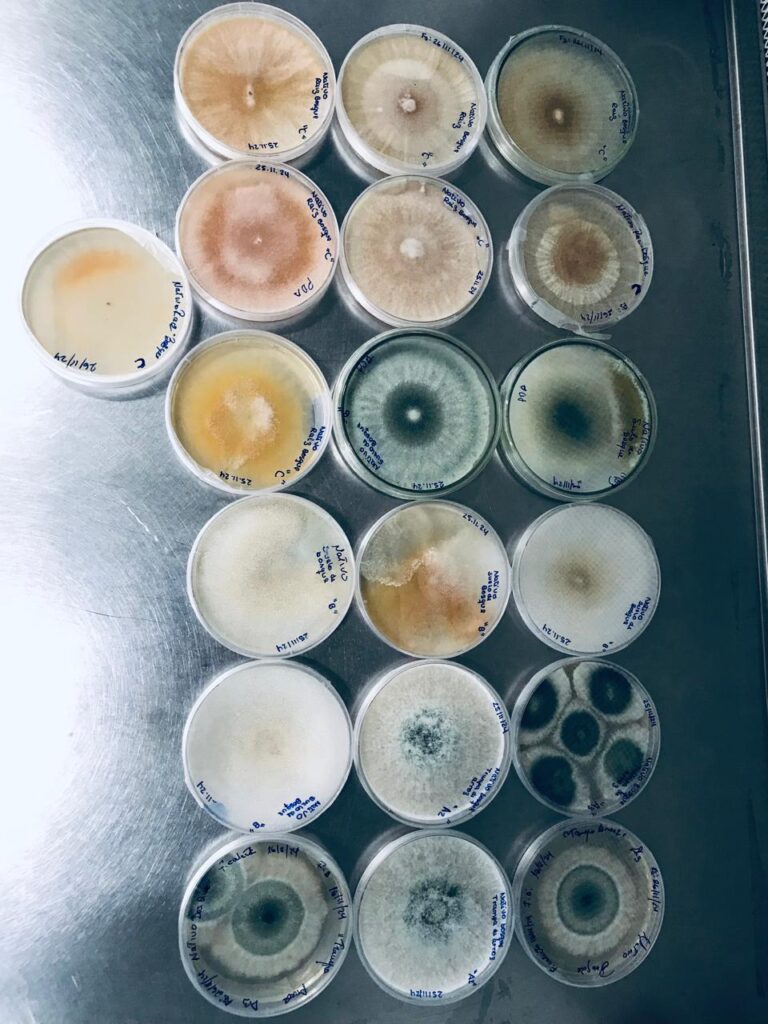
Trichoderma harzianum is a widely studied beneficial fungus that acts directly in the soil, protecting crops against diseases and promoting healthy growth. In the agricultural ecosystem, it fulfills two main functions:
- Biocontrol agent: combats phytopathogenic fungi, bacteria, and nematodes, and induces systemic resistance in plants.
- Bio-stimulant: improves nutrient solubilization and promotes the natural production of plant hormones.
This microorganism colonizes the rhizosphere and its effectiveness largely depends on its geographical origin. Each isolated sample, or strain, presents unique characteristics in its interaction with the soil and climate. Since 2021, we have been working with a mother strain selected for its high efficacy, and we plan to expand our research with native strains from our sacha inchi plots, with the aim of identifying and reproducing those best adapted to the Amazonian environment.
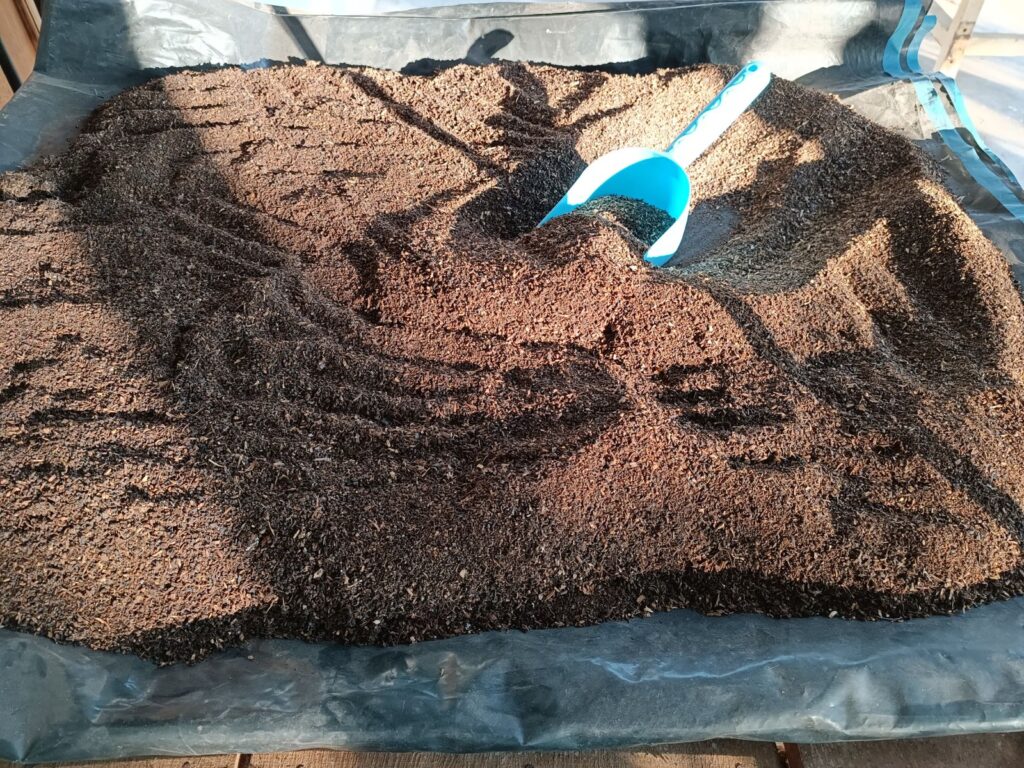
This innovative fertilizer, known as frass, is obtained through bioconversion, a process in which larvae of the species Hermetia illucens (Black Soldier Fly) transform fresh organic waste into a high-value agronomic fertilizer.
Although this technology already has a consolidated industry in Europe and Asia, it is still incipient in Peru. Our competitive advantage lies in the subtropical climate of the San Martín region, ideal for the natural development of this native species, thus reducing the costs associated with controlled temperature environments.
In October 2024, we formalized a Public-Private Partnership with the District Municipality of La Banda de Shilcayo, initiating the Pilot Plant for Organic Waste Valorization with Black Soldier Fly Larvae, located in the District Nursery. This pioneering project in the country aims to reduce household organic waste through bioconversion cycles of 15 to 20 days. The generated fertilizer will initially be used for trials in the cultivation of sacha inchi.
Some benefits that frass provides to the soil and plants are:
- Organic matter
- Moisture retention
- Nutrients
- Chitin

